A Teaching Method Is Not the Same Thing as a Diagnostic Method
H.U.N.T.E.R. answers a different question than Speed of Light. H.U.N.T.E.R. is what a technician does on a job -- the sequence of decisions that turns a customer's water-loss complaint into a documented finding. Speed of Light is how a student learns to do that reliably, under time pressure, on a real job site, in two days instead of two months.
Most training is one of two things: a classroom that explains concepts without letting students touch anything, or a ride-along where the student watches an expert work and hopes something sticks. Both are slow. A classroom produces students who can describe a process but freeze the first time a pool doesn't match the textbook. A watch-only ride-along produces students who can recognize what an expert did after the fact, but can't reproduce it themselves under pressure.
The Speed of Light Method exists to close that gap in the field, on real jobs, in the time an academy actually has with a student.
The Five Steps -- and the Book Work That Locks Them In
How Speed of Light Differs From Watch-and-Learn Training
Most ride-alongs stop at step 2. Speed of Light doesn't move on until the student has done the skill solo and explained it back -- the two steps that actually prove learning happened.
Watch-only training: this is usually the entire lesson -- watch the expert and take notes. Speed of Light: this is the setup, not the lesson.
Watch-only training: rarely happens -- the student is handed a tool and told to try. Speed of Light: the student is never handed a task without hands-on correction first.
Watch-only training: skipped -- the student's first solo attempt is their first paying customer. Speed of Light: the first solo attempt happens on a training job, with Jeff present.
Watch-only training: never checked -- nobody finds out what didn't stick until it costs a customer. Speed of Light: gaps surface on the job site, not in the field alone later.
I built the Speed of Light Method because I noticed the same thing happen with every student who just watched me work: they could describe what I did, but they couldn't do it themselves the first time it was their turn. Watching isn't the same as doing, and doing once isn't the same as being able to teach it back.
Explain, model, guide, let them do it solo, then have them teach it to me -- that's the sequence that actually builds a working technician instead of a spectator. Book work at the end of the day locks it in and pushes it further than the field time alone would.
This is the "new way" I want LBA known for -- not because it's faster for the sake of being faster, but because it's the fastest way I've found to get a student to the point where they trust their own hands on a real job.
Why Book Work at the End of the Day Matters
Field time builds muscle memory. Book work builds the language and reasoning around it -- the part a student needs when a job doesn't match what they practiced that day. Closing each training day with written work does two things: it solidifies what was just covered while it's still fresh, and it expands the lesson beyond the one pool the student happened to work on that day.
Speed of Light in Action
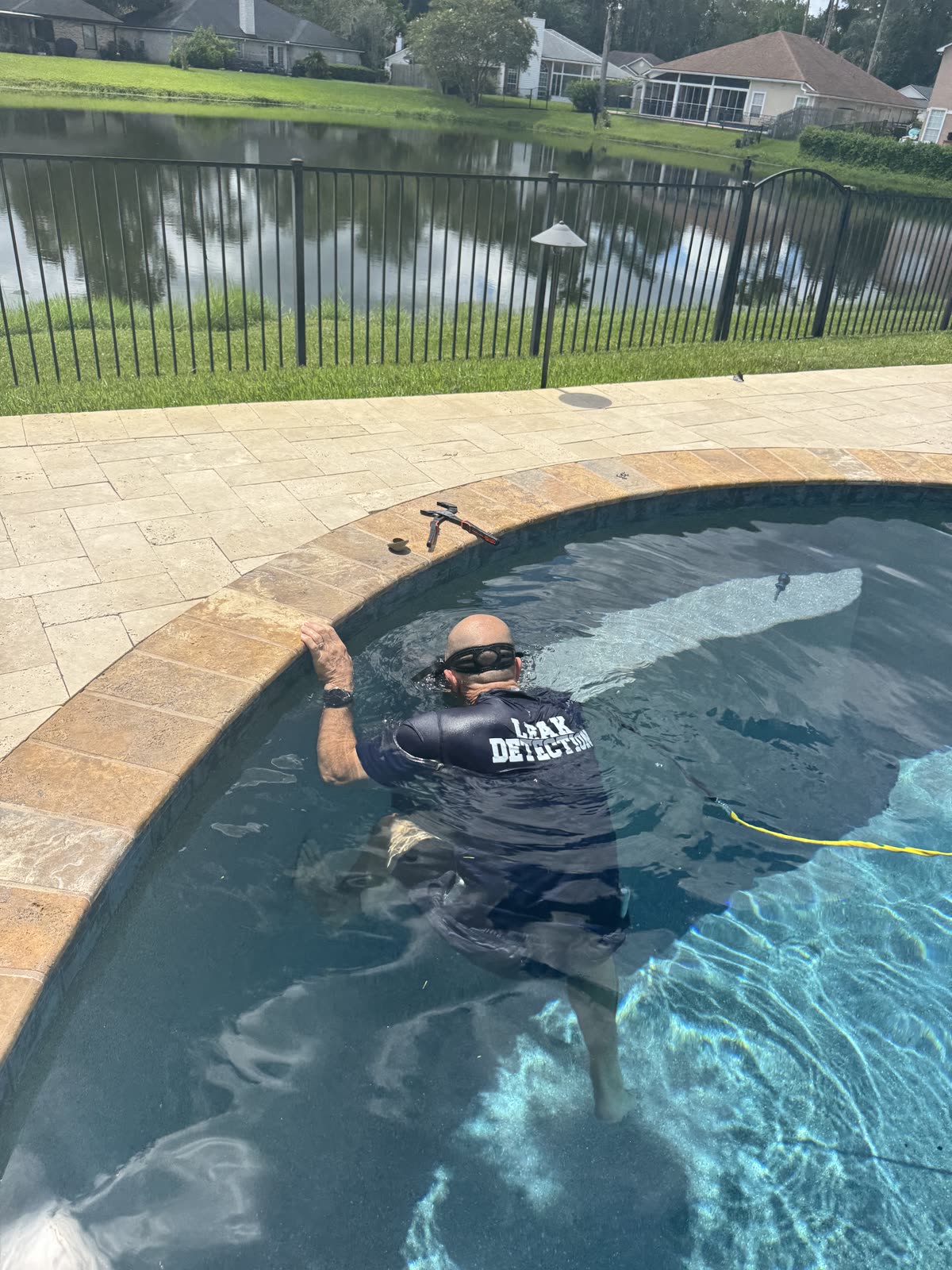
Tim, who runs IDTheLeak.com in Jacksonville, Florida, went through the full Speed of Light sequence during his 2-Day Field Ride-Along -- explain, model, guide, solo practice, and teaching it back to Jeff on the job site. See the real photos and video from his training.
Common Mistakes
- Stopping at step 2 -- explaining and modeling without ever handing the task to the student
- Skipping the teach-back -- without it, gaps in understanding stay invisible until a real job exposes them
- Treating book work as optional -- it's what keeps the lesson from fading once the student leaves the job site
- Rushing a student to solo practice before they've been properly guided through the task first
- Claiming the method guarantees a finished technician after one Ride-Along -- it accelerates learning, it doesn't replace repetition in the field afterward
Frequently Asked Questions
Is the Speed of Light Method the same as the H.U.N.T.E.R. Method?
No. H.U.N.T.E.R. is the diagnostic process a technician follows on a job -- what to do. Speed of Light is the teaching sequence LBA uses to get a student to the point where they can actually do it -- how it's taught. Every Ride-Along teaches H.U.N.T.E.R. using the Speed of Light Method.
How long does it take to go through all five steps?
It depends on the skill and the student, but the sequence is designed to move quickly -- most skills covered during a 2-Day Field Ride-Along go through explain, model, guide, solo practice, and teach-back within the same training day, followed by book work that evening.
Does completing the Speed of Light Method make someone a certified technician?
No. Completing LBA training and the Speed of Light Method does not grant a contractor license, plumbing license, or any professional credential in any jurisdiction. It builds hands-on competence faster than watch-only training, but licensing and work authorization requirements vary by state and must be confirmed locally.
The Speed of Light Method: The New Way to Learn Leak Detection
Explain. Model. Guide. Practice solo. Teach it back. Book work to lock it in. Built to get a student from watching to doing in the time an academy actually has with them.
Book the 2-Day Ride-Along See a Real Ride-Along